How to Test Saffron Quality: A Complete Guide to Authenticity, Purity, and Laboratory Testing
Introduction
Saffron is one of the most valuable spices in the world, which makes quality, purity, and authenticity extremely important for both consumers and professional buyers.
A small quantity of high-quality saffron can have a significantly higher value than a larger quantity of low-quality or adulterated saffron. For this reason, knowing how to evaluate saffron quality is essential when purchasing Iranian saffron for household use, restaurants, food manufacturing, wholesale distribution, or international export.
Saffron quality cannot be determined by appearance alone. Although the color, shape, and aroma of saffron threads can provide useful clues, professional quality assessment requires laboratory testing and standardized measurements.
The most important international reference for saffron quality is ISO 3632. This standard provides scientific methods for evaluating characteristics such as coloring strength, aroma-related compounds, flavor-related compounds, moisture, and other quality parameters.
In this comprehensive guide, we explain how saffron quality can be evaluated, what consumers can check at home, which laboratory tests are used by professional buyers, and why premium Iranian saffron is highly valued in international markets.
Why Is Saffron Quality Important?
The price of saffron depends heavily on its quality.
Two saffron samples may look similar but have completely different chemical characteristics. One may contain high levels of crocin and safranal, while another may have weak coloring strength or may have been mixed with foreign materials.
Quality affects:
- Coloring performance
- Aroma
- Flavor
- Shelf life
- Market value
- Export potential
- Consumer satisfaction
For wholesalers and importers, quality is particularly important because purchasing a large quantity of low-quality saffron can result in significant financial losses.
What Determines Saffron Quality?
Several characteristics contribute to overall saffron quality.
The most important include:
- Crocin content
- Safranal content
- Picrocrocin content
- Moisture level
- Purity
- Thread integrity
- Color
- Aroma
- Proper drying
- Storage conditions
No single characteristic should be used to judge saffron quality.
A professional evaluation combines visual inspection with laboratory analysis.
How to Check Saffron Quality at Home
Consumers can perform several simple observations before purchasing or using saffron.
These methods cannot replace laboratory analysis, but they can help identify suspicious products.
1. Examine the Color
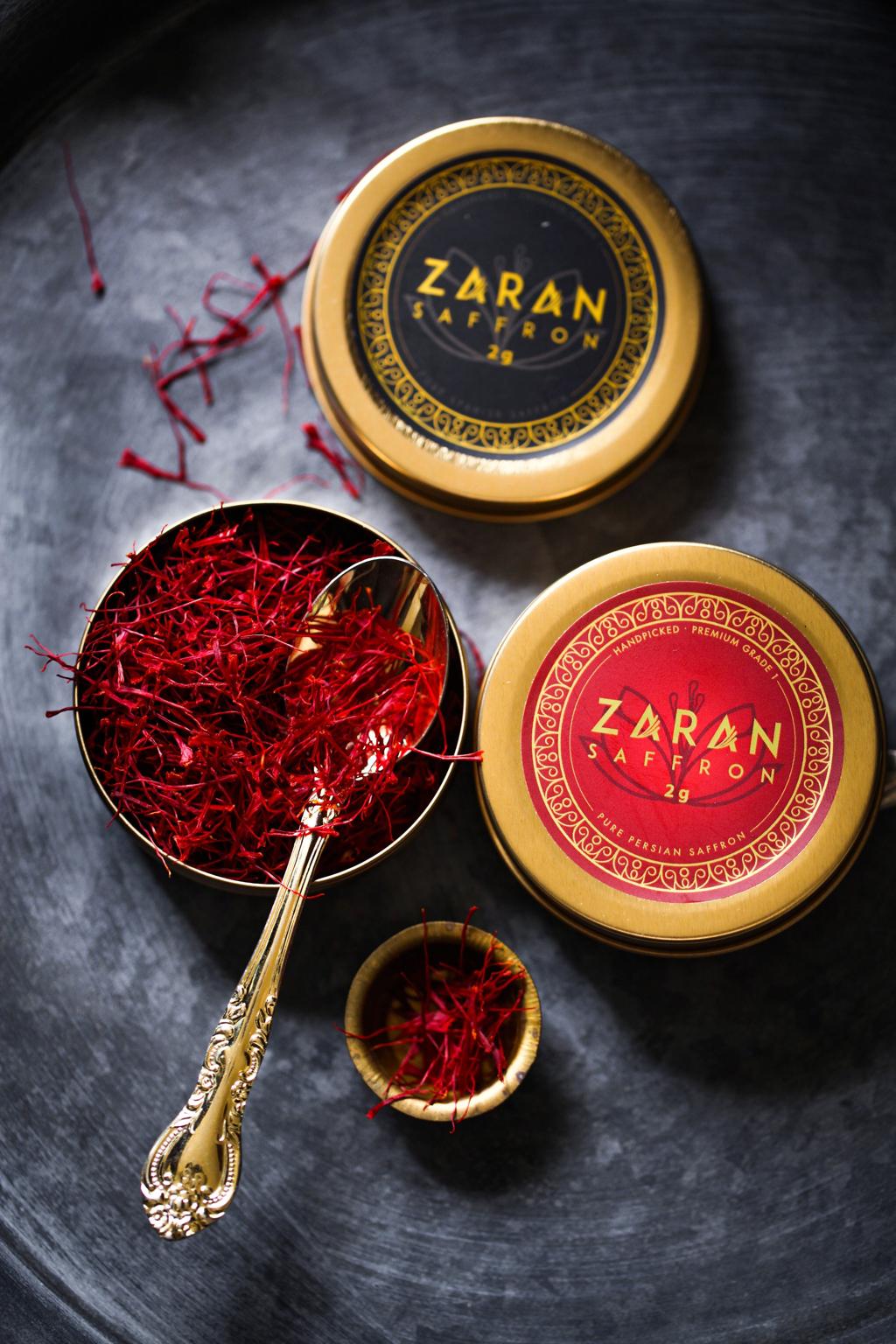
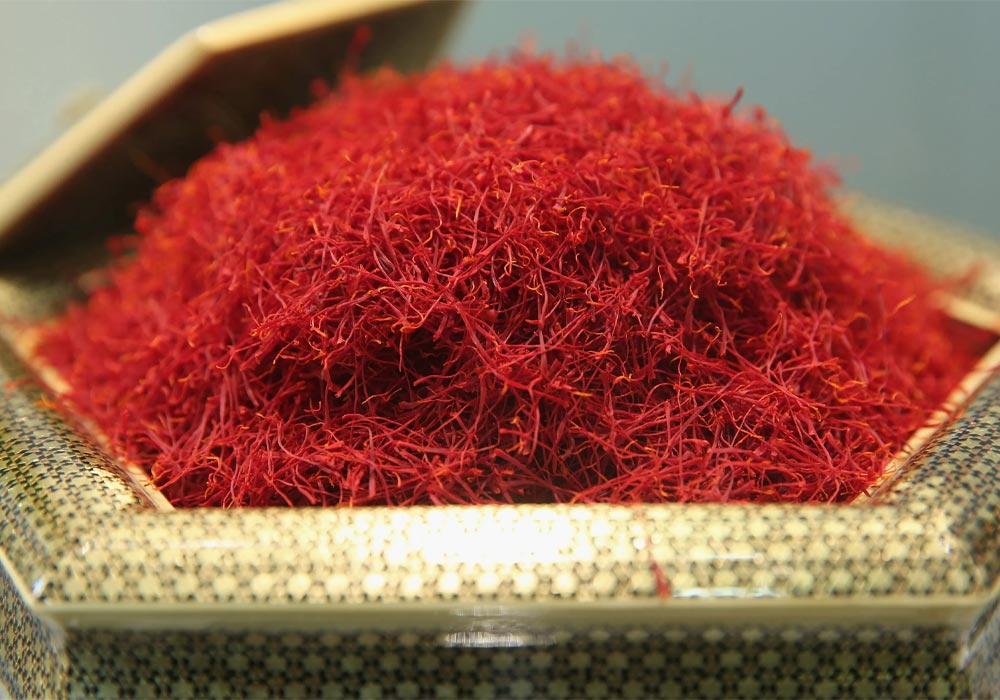
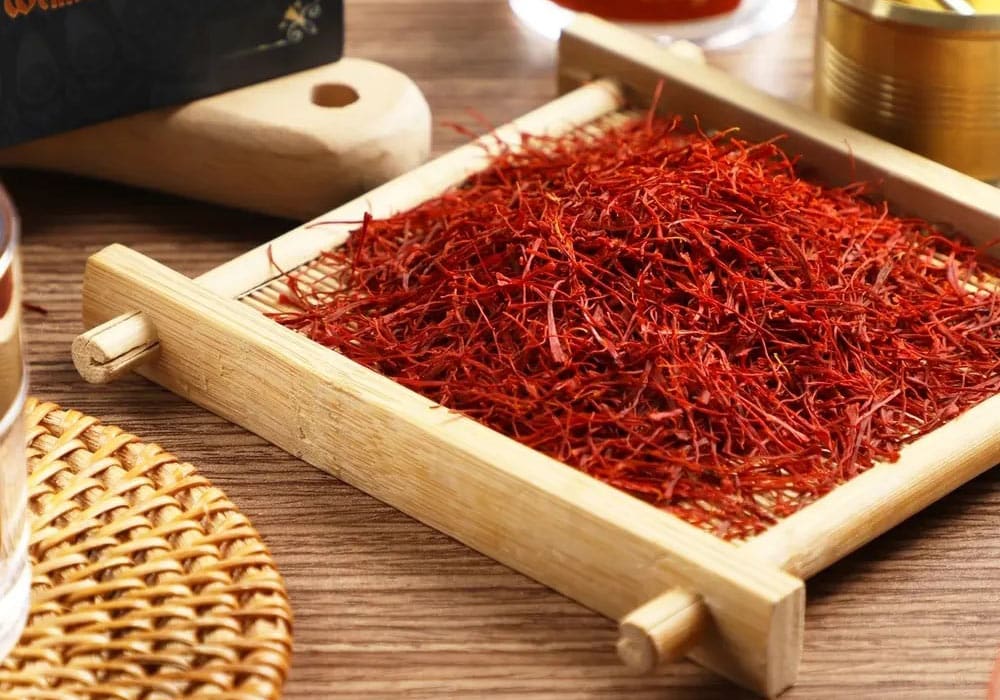
Pure saffron threads are generally deep red or crimson.
The color should appear natural rather than unnaturally bright or artificially uniform.
However, color alone is not sufficient to determine quality.
Some low-quality or adulterated products may be artificially colored to appear more attractive.
2. Examine the Shape of the Threads
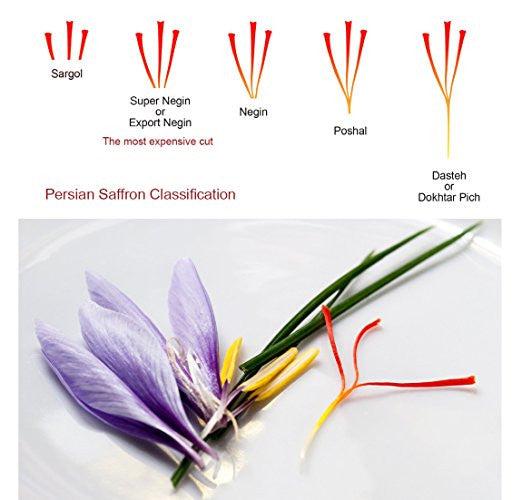
Authentic saffron stigmas have a naturally distinctive shape.
The thread typically becomes wider toward one end, creating a trumpet-like appearance.
The structure may vary depending on the saffron grade.
For example, Super Negin and Negin saffron generally contain long and relatively uniform red threads, while Pushal saffron includes a portion of the yellow style.
If the product consists of unusual fibers that do not resemble saffron threads, further investigation is recommended.
3. Smell the Saffron
Aroma is one of the most recognizable characteristics of authentic saffron.
High-quality saffron has a distinctive, intense, slightly hay-like and honey-like aroma.
The exact sensory experience can vary depending on origin, drying method, age, and storage.
Saffron that has almost no aroma may be old, poorly stored, or of low quality.
An unusually chemical or perfume-like smell may also be a warning sign.
4. Taste a Very Small Amount
Authentic saffron generally has a characteristic slightly bitter and earthy taste.
It should not taste strongly sweet.
A suspiciously sweet taste may indicate the presence of added substances.
However, taste should never be used as the only authenticity test.
5. Observe How Saffron Releases Color
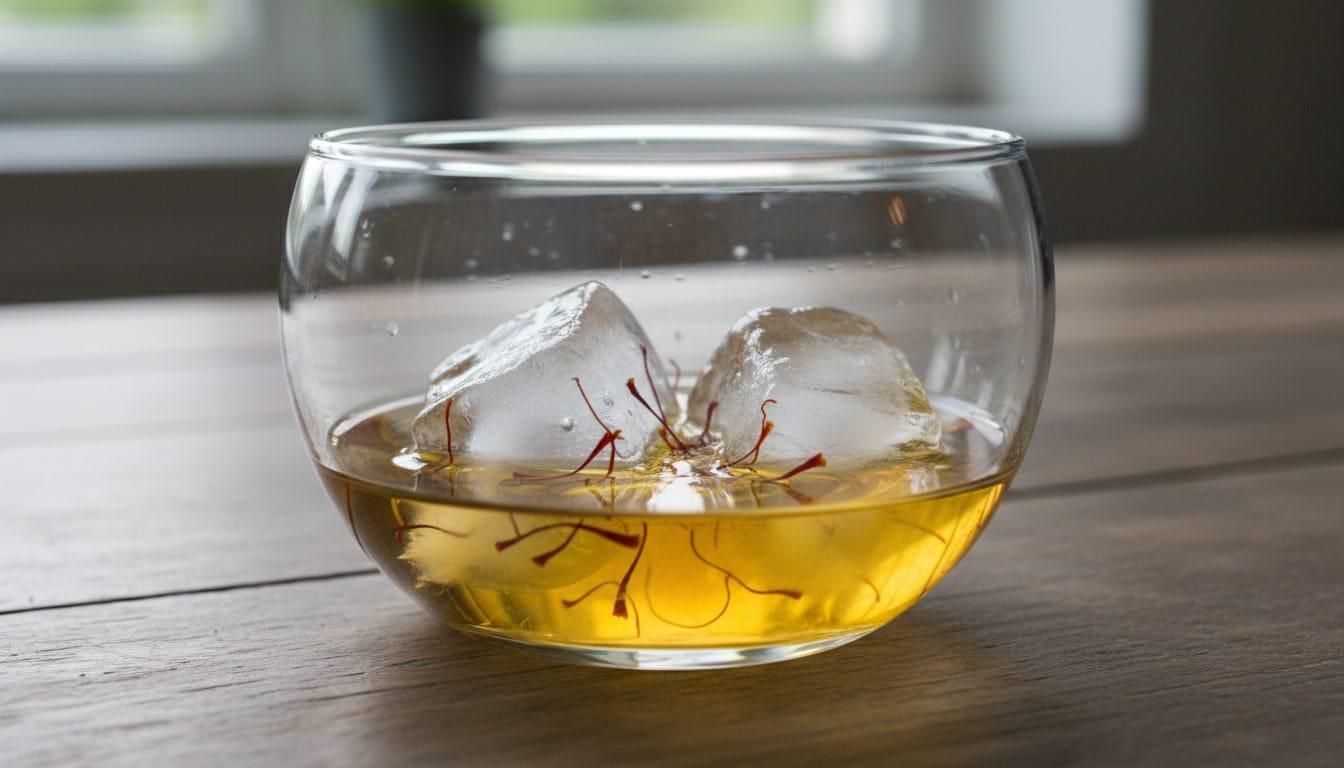
One traditional method is to place a small amount of saffron in warm water.
Authentic saffron gradually releases its color.
The threads remain recognizable during the process.
Artificially colored materials may release an unusually intense color very quickly.
This simple test can provide a useful warning sign, but it is not a definitive laboratory test.
Why Water Testing Is Not Enough
Many consumers believe that placing saffron in water is a definitive authenticity test.
It is not.
Water-based testing can help identify certain suspicious products, but it cannot determine:
- Exact crocin concentration
- Safranal concentration
- Picrocrocin concentration
- Moisture percentage
- Microbiological quality
- Complete chemical purity
Professional buyers should therefore rely on laboratory analysis when purchasing significant quantities.
What Is Crocin and Why Does It Matter?
Crocin is one of the most important chemical compounds in saffron.
It is primarily responsible for saffron’s characteristic coloring ability.
The higher the appropriate crocin content, the stronger the coloring performance can be.
This is particularly important for:
- Food manufacturers
- Restaurants
- Beverage producers
- Spice companies
- Pharmaceutical industries
For commercial buyers, strong coloring performance can improve production efficiency because a smaller quantity may achieve the desired color.
What Is Safranal?
Safranal is one of the major compounds associated with saffron’s characteristic aroma.
The aroma of saffron is one of its most important sensory characteristics.
Factors such as:
- Harvest timing
- Drying method
- Storage conditions
- Age
can influence the aromatic profile of saffron.
Professional laboratory testing can provide objective information about saffron’s volatile compounds.
What Is Picrocrocin?
Picrocrocin is associated with the characteristic bitter taste of saffron.
Together with crocin and safranal, it forms an important part of saffron’s chemical and sensory profile.
A high-quality saffron sample should demonstrate an appropriate balance of these important compounds.
Understanding ISO 3632 Saffron Testing
ISO 3632 is one of the most important international references for saffron quality assessment.
The standard provides methods for evaluating saffron through measurable characteristics.
Among the most important are:
- Coloring strength
- Aroma-related characteristics
- Flavor-related characteristics
- Moisture
- Extraneous matter
- Other quality parameters
For professional export transactions, laboratory reports based on recognized standards can provide significantly greater confidence than visual inspection alone.
How Is Saffron Tested in a Laboratory?
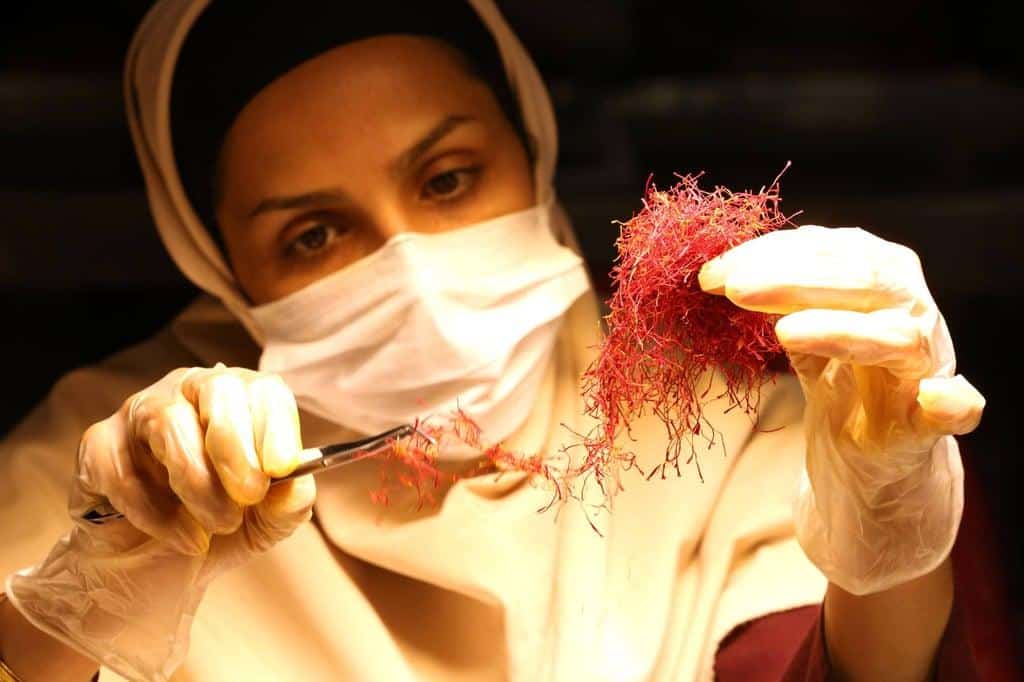
Professional saffron laboratories use controlled analytical procedures.
A typical quality-control process may include:
Sample Preparation
A representative saffron sample is selected.
The sample must accurately represent the larger batch.
Spectrophotometric Analysis
Laboratory instruments are used to measure absorbance associated with important saffron compounds.
This provides information about coloring strength and other chemical characteristics.
Moisture Analysis
The laboratory determines whether the saffron contains excessive moisture.
Purity Assessment
The sample can be examined for foreign materials and other unwanted substances.
Documentation
The results are recorded in a laboratory report that can be used for commercial quality control.
Why Representative Sampling Matters
Testing only one attractive-looking portion of a shipment can produce misleading results.
Professional buyers should ensure that samples are representative of the entire batch.
This is particularly important for large wholesale transactions.
A shipment may contain variations caused by:
- Different harvest lots
- Different drying conditions
- Mixing of grades
- Storage differences
Representative sampling reduces this risk.
Common Types of Saffron Adulteration
Because saffron has a high market value, adulteration is a significant concern.
Potential adulterants can include:
- Dyed plant materials
- Other plant fibers
- Colored threads
- Foreign botanical materials
- Excess moisture
- Materials added to increase apparent weight
The exact form of adulteration varies between markets and products.
Why Artificial Coloring Is a Problem
Artificial coloring can make low-quality material appear visually similar to premium saffron.
This creates several problems:
- Consumers may overpay.
- Importers may receive inferior products.
- Brand reputation can suffer.
- Food safety concerns may arise depending on the substance used.
For this reason, professional quality-control procedures are extremely important.
How Storage Affects Saffron Quality
Even authentic saffron can lose quality if it is stored incorrectly.
Exposure to:
- Light
- Moisture
- Oxygen
- Heat
- Strong odors
can gradually affect saffron’s sensory and chemical properties.
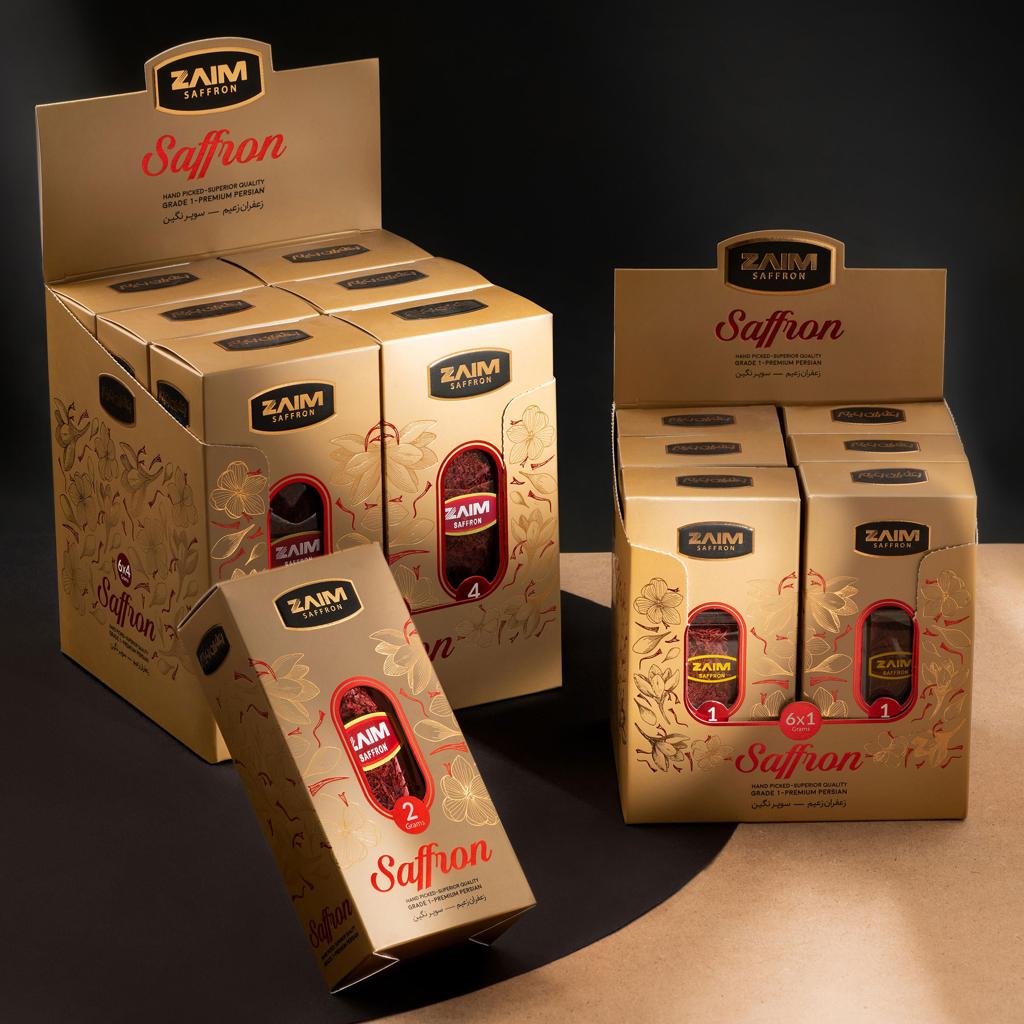
Premium saffron should therefore be stored in suitable airtight packaging in a cool, dry, and dark environment.
How Packaging Protects Saffron Quality
Proper packaging is an essential part of saffron quality management.
Good packaging helps reduce exposure to environmental factors.
Common packaging options include:
- Metal containers
- Glass containers
- Food-grade pouches
- High-barrier packaging
- Premium gift boxes
The best option depends on the intended market, storage period, transportation conditions, and brand positioning.
Does Saffron Grade Determine Quality?
Saffron grades are useful indicators, but grade names should not be treated as a substitute for laboratory analysis.
Common Iranian saffron grades include:
- Super Negin
- Negin
- Sargol
- Pushal
- Dasteh
Each grade has different physical characteristics and market applications.
For example, Super Negin is valued for its long, thick, red threads and premium presentation.
However, two products carrying the same grade name can still differ in actual chemical quality.
Super Negin Saffron Quality
Super Negin is one of the most premium commercial saffron grades.
It is characterized by:
- Long red threads
- Thick stigmas
- High visual uniformity
- Excellent presentation
It is particularly popular for:
- Luxury retail
- Premium gift boxes
- International export
- High-end food products
However, laboratory testing remains the most reliable way to evaluate the chemical quality of any specific batch.
Negin Saffron Quality
Negin saffron also belongs to the premium segment.
It generally offers:
- Long red threads
- Attractive appearance
- Strong coloring ability
- Excellent aroma
Negin is often selected by buyers seeking a combination of premium quality and competitive pricing.
Sargol Saffron Quality
Sargol consists primarily of the red stigma portion without the yellow style.
It is widely used for:
- Household consumption
- Restaurants
- Food production
- Wholesale markets
Its quality should still be assessed based on both physical and chemical characteristics.
Pushal Saffron Quality
Pushal contains red stigmas together with a portion of the yellow style.
Its natural structure can make it attractive to buyers who prefer traditional saffron presentation.
As with other grades, quality depends on the actual characteristics of the batch rather than the grade name alone.
How to Compare Two Saffron Samples
When comparing two samples, consider:
| Quality Factor | Sample A | Sample B |
|---|---|---|
| Appearance | Evaluate | Evaluate |
| Aroma | Evaluate | Evaluate |
| Thread Integrity | Evaluate | Evaluate |
| Coloring Strength | Laboratory Test | Laboratory Test |
| Moisture | Laboratory Test | Laboratory Test |
| Purity | Laboratory Test | Laboratory Test |
| Origin | Verify | Verify |
| Packaging | Evaluate | Evaluate |
This approach is much more reliable than comparing price alone.
Why Cheap Saffron Can Be Expensive
A lower price does not always mean a better deal.
If saffron has weak coloring strength, the buyer may need to use more of it to achieve the desired result.
This can increase the effective cost.
For commercial buyers, the correct comparison is often based on performance rather than simply price per kilogram.
Saffron Quality for Restaurants
Restaurants typically need saffron with:
- Strong coloring
- Good aroma
- Consistent quality
- Reliable supply
- Competitive pricing
Negin and Sargol saffron can be attractive choices depending on the restaurant’s requirements.
Saffron Quality for Food Manufacturers
Food manufacturers usually require greater consistency.
They may prioritize:
- Laboratory certificates
- Batch consistency
- Crocin levels
- Moisture control
- Traceability
- Reliable supply
For these buyers, laboratory documentation is often more important than visual appearance.
Saffron Quality for Export
Export buyers generally require a combination of:
- High purity
- Consistent quality
- Proper packaging
- Accurate labeling
- Laboratory documentation
- Reliable supply
Premium Iranian saffron can meet the requirements of a wide range of international markets when properly processed and documented.
How Buyers Can Reduce the Risk of Poor-Quality Saffron
Professional buyers should:
- Purchase from established suppliers.
- Request representative samples.
- Compare laboratory reports.
- Confirm the product grade.
- Verify origin information.
- Review packaging specifications.
- Check storage conditions.
- Establish quality requirements before purchasing.
These steps can significantly reduce commercial risks.
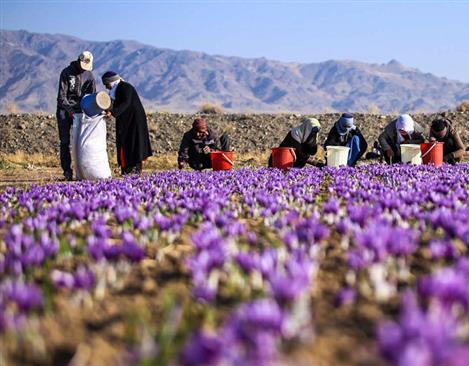
Why Iranian Saffron Is Highly Valued
Iranian saffron has a long history and a strong reputation in international markets.
Its advantages include:
- Extensive cultivation experience
- Suitable growing conditions
- Diverse grades
- Strong aroma
- High coloring potential
- Large production capacity
For these reasons, Iranian saffron remains an important choice for international buyers.
The Importance of Traceability
Traceability is becoming increasingly important in the international food industry.
A professional saffron supply chain should ideally allow buyers to identify information such as:
- Origin
- Harvest period
- Production batch
- Processing method
- Packaging date
Better traceability increases confidence and supports quality management.
Can Consumers Identify Every Adulterated Saffron Product?
No.
Some forms of adulteration can be difficult to detect through simple household methods.
Visual inspection and water testing can provide clues, but they cannot replace laboratory analysis.
If authenticity is critical, professional testing is recommended.
How Often Should Export Saffron Be Tested?
Testing frequency depends on:
- Supplier requirements
- Batch size
- Destination regulations
- Product specifications
- Customer agreements
Large commercial buyers may establish testing requirements for every batch or according to a defined quality-control program.
Frequently Asked Questions
How can I test saffron quality at home?
You can examine the color, thread structure, aroma, taste, and how gradually the saffron releases color in warm water. These methods provide preliminary information but cannot replace laboratory testing.
What is the most important chemical compound in saffron?
Crocin is particularly important because it is associated with saffron’s coloring strength. Safranal and picrocrocin are also important quality-related compounds.
What is ISO 3632?
ISO 3632 is an international standard used for evaluating saffron quality through defined physical and chemical parameters.
Can fake saffron look real?
Yes. Some adulterated products can resemble authentic saffron visually, which is why laboratory analysis is important for professional purchasing.
Is Iranian saffron high quality?
Iran produces a wide range of saffron qualities. Premium Iranian saffron is highly valued internationally for its aroma, color, and overall quality.
Does Super Negin always have the highest chemical quality?
Not necessarily. Super Negin describes a premium physical grade, particularly based on thread characteristics. Laboratory analysis is needed to determine the chemical quality of a specific batch.
Does price prove saffron quality?
No. Price alone cannot prove authenticity or chemical quality.
What should wholesalers look for when buying saffron?
Wholesalers should evaluate grade, origin, laboratory results, purity, moisture, consistency, packaging, traceability, and supplier reliability.
Conclusion
Testing saffron quality requires more than simply looking at the color of the threads.
Visual characteristics, aroma, taste, thread structure, and simple household observations can help consumers identify suspicious products, but professional buyers require a much more comprehensive approach.
Laboratory analysis provides objective information about important quality characteristics such as crocin, safranal, picrocrocin, moisture, and purity. International standards such as ISO 3632 provide a common framework for evaluating saffron and comparing different batches.
For consumers, restaurants, wholesalers, manufacturers, and exporters, understanding these quality indicators makes it easier to purchase saffron with confidence.
Iranian saffron, particularly premium grades such as Super Negin and Negin, continues to hold an important position in the international market. However, the quality of each individual batch should always be evaluated rather than assumed solely from its grade or country of origin.
For buyers seeking premium Iranian saffron, combining a trusted supplier with proper sampling, laboratory analysis, suitable packaging, and reliable quality documentation remains the safest approach.