Iranian Saffron for Export: A Complete Guide for International Buyers
Introduction
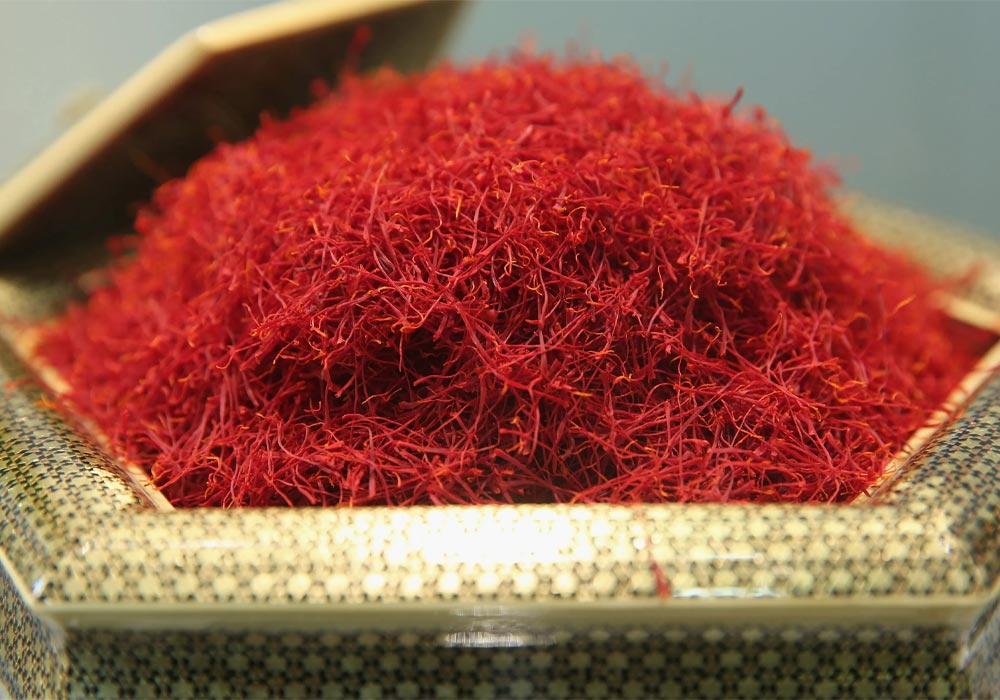
Iranian saffron has a strong position in the global saffron market and is widely recognized for its distinctive aroma, color, flavor, and range of commercial grades.
For international buyers, however, purchasing Iranian saffron is about much more than choosing a product based on appearance or price. Importers, wholesalers, distributors, food manufacturers, restaurants, and private-label brands need to consider origin, grade, purity, laboratory analysis, packaging, storage, documentation, consistency, and supplier reliability.
This is especially important because saffron is a high-value spice. Small differences in quality can have a significant effect on the commercial value of a shipment.
For buyers purchasing saffron in bulk, the right supplier should be able to provide clear information about the product, its origin, specifications, packaging, and quality-control procedures.
In this comprehensive guide, we explain what international buyers should know before purchasing Iranian saffron for export, how the main grades differ, how saffron quality can be evaluated, and what questions buyers should ask suppliers.
Why Is Iranian Saffron Important in the Global Market?
Iran has a long history of saffron cultivation and processing, particularly in regions where environmental conditions are suitable for saffron production.
Iranian saffron is available in several commercial forms and grades, allowing suppliers to serve different market segments.
International buyers may purchase Iranian saffron for:
- Food manufacturing
- Restaurants
- Spice distribution
- Retail packaging
- Private-label products
- Premium gift products
- Hospitality
- Beverage production
- Confectionery
- Wholesale distribution
The diversity of available grades is one of the advantages for buyers looking to source saffron for different applications.
What Makes Iranian Saffron Attractive to International Buyers?
Several characteristics make Iranian saffron commercially attractive.
These include:
- Strong natural aroma
- Distinctive flavor
- High coloring potential in quality batches
- Multiple commercial grades
- Long production history
- Availability in bulk quantities
- Suitability for retail and industrial applications
However, buyers should remember that not every product marketed as Iranian saffron has the same quality.
The country of origin is important, but the quality of an individual batch still needs to be evaluated.
Understanding Iranian Saffron Grades
One of the first questions international buyers ask is:
Which Iranian saffron grade should I buy?
The answer depends on the intended application.
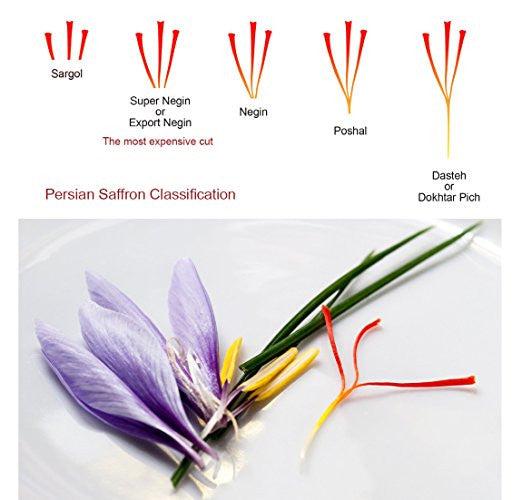
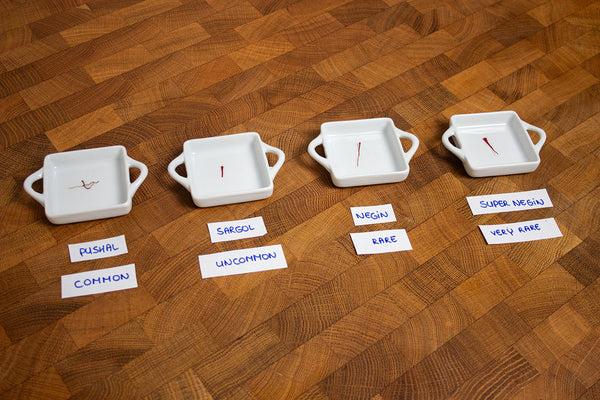
The most commonly discussed Iranian saffron grades include:
- Super Negin
- Negin
- Sargol
- Pushal
- Dasteh
These grades differ primarily in physical appearance and the portions of the saffron stigma and style included in the product.
A buyer should therefore select a grade according to the needs of the target market rather than simply choosing the most expensive option.
Super Negin Iranian Saffron
Super Negin is generally considered one of the premium physical grades of Iranian saffron.
It is particularly valued for its:
- Long red threads
- Thick appearance
- Attractive presentation
- High visual uniformity
- Premium market positioning
Super Negin is commonly considered for:
- Luxury retail
- Premium gift packaging
- High-end restaurants
- International specialty markets
- Private-label premium products
For buyers selling saffron directly to consumers, the visual appearance of Super Negin can be an important marketing advantage.
However, a premium physical grade does not automatically guarantee superior laboratory results.
The actual chemical quality of every batch should be evaluated independently.
Negin Iranian Saffron
Negin saffron is another premium Iranian grade.
It is typically characterized by relatively long red threads and an attractive appearance.
Negin can be a useful choice for buyers who want a premium product while targeting a somewhat broader price range than the highest-end retail products.
Potential applications include:
- Wholesale distribution
- Restaurants
- Premium retail
- Food service
- Export packaging
Sargol Iranian Saffron
Sargol is one of the most widely recognized Iranian saffron types.
It primarily consists of the red stigma portion and generally contains little or none of the yellow style.
Sargol can be particularly attractive for buyers who prioritize:
- Strong visual redness
- Culinary use
- Food manufacturing
- Restaurants
- Competitive pricing
For many commercial applications, Sargol can provide an excellent balance between quality and cost.
Pushal Iranian Saffron
Pushal saffron contains red stigmas together with a portion of the yellow style.
Its appearance differs from Sargol and Negin, and it is used in various domestic and international markets.
Pushal can be suitable for buyers who prioritize traditional presentation or are targeting markets where this grade has established demand.
Dasteh Saffron
Dasteh, also known as bunch saffron, represents a more traditional form in which the saffron threads remain bundled.
It can have a distinctive visual presentation and is used in some traditional markets.
For export buyers, the suitability of Dasteh depends heavily on the destination market and customer preferences.
Which Iranian Saffron Grade Should You Import?
There is no single answer for every buyer.
Consider the following:
| Buyer Type | Potentially Suitable Grade |
|---|---|
| Premium retail | Super Negin |
| Luxury gift packaging | Super Negin |
| Premium restaurants | Super Negin / Negin |
| General wholesale | Negin / Sargol |
| Food manufacturing | Sargol / suitable bulk grade |
| Cost-sensitive buyers | Sargol / Pushal |
| Traditional markets | Pushal / Dasteh |
This table should be viewed as a starting point rather than a strict rule.
The best grade depends on the destination market, customer expectations, product specifications, and budget.
How Is Iranian Saffron Quality Tested?
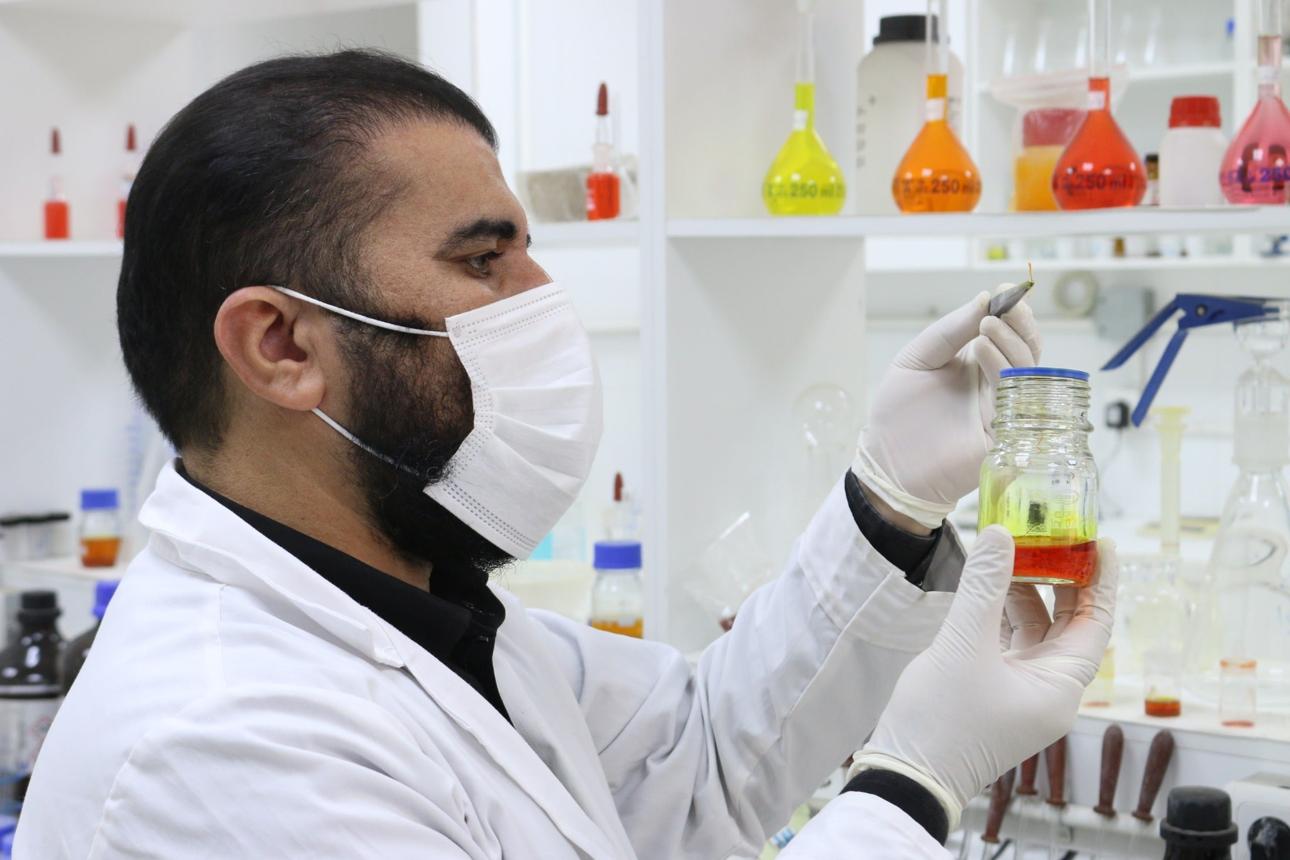
Professional saffron buyers should not rely solely on appearance.
Laboratory testing can provide objective information about important quality characteristics.
One of the most important international references is the ISO 3632 standard.
As of 2026, ISO 3632-1:2025 is the current specification standard for dried saffron, covering filaments, cut filaments, and powder.
ISO 3632-2:2010 provides test methods and remains the current published test-method standard according to ISO.
What Does ISO 3632 Measure?
Saffron quality testing can evaluate characteristics associated with:
- Coloring strength
- Aroma strength
- Taste strength
- Moisture
- Foreign matter
- Extraneous matter
- Other quality parameters
Laboratory methods use controlled analytical procedures rather than subjective visual judgment.
For commercial buyers, this can make it easier to compare different batches and suppliers.
Crocin and Saffron Coloring Strength
Crocin is closely associated with the coloring strength of saffron.
For food manufacturers and restaurants, coloring performance can be commercially important because it affects how much saffron is needed to achieve the desired result.
A buyer comparing two suppliers should therefore consider laboratory results rather than simply comparing the visual redness of the threads.
International saffron quality testing frameworks use spectrophotometric measurements to evaluate coloring strength.
Safranal and Saffron Aroma
Safranal is an important compound associated with saffron’s characteristic aroma.
Aroma is particularly important for:
- Premium food products
- Restaurants
- Specialty retail
- High-end culinary applications
As with coloring strength, aroma quality can be influenced by cultivation, harvesting, drying, storage, and age.
Laboratory analysis can provide objective information about aroma-related characteristics.
Picrocrocin and Saffron Flavor
Picrocrocin is associated with the characteristic taste of saffron.
Together, compounds associated with color, aroma, and flavor provide a more complete picture of saffron quality.
This is why professional buyers should avoid evaluating a shipment based on appearance alone.
Why Laboratory Testing Matters for Export Buyers
A laboratory report can help an importer understand whether a batch meets agreed specifications.
Depending on the transaction, buyers may request information related to:
- Moisture
- Coloring strength
- Aroma strength
- Taste strength
- Purity
- Foreign materials
- Artificial colorants
- Microbiological or other food-safety requirements
The exact testing requirements should be agreed upon between the buyer, supplier, and destination-market requirements.
How to Choose an Iranian Saffron Supplier
Selecting a supplier is one of the most important decisions in an international saffron purchase.
A professional supplier should be able to provide clear answers about:
- Product origin
- Saffron grade
- Available quantities
- Quality specifications
- Packaging
- Storage
- Documentation
- Laboratory testing
- Lead time
- Export experience
Buyers should be cautious when suppliers provide vague information or make unusually broad quality claims without supporting documentation.
Questions to Ask Before Buying Iranian Saffron
Before placing a wholesale order, an importer can ask:
1. What is the origin of the saffron?
The supplier should clearly identify the country and, where relevant, production region.
2. What grade is being offered?
Ask whether the product is Super Negin, Negin, Sargol, Pushal, Dasteh, or another specification.
3. Is a laboratory report available?
For significant purchases, laboratory documentation can be valuable.
4. What is the moisture level?
Moisture can affect stability, weight, and storage.
5. How is the saffron packaged?
Packaging should protect the product during storage and transportation.
6. What is the minimum order quantity?
MOQ varies between suppliers and packaging formats.
7. Can the supplier provide samples?
Sampling is strongly recommended before large commercial orders.
Why Sampling Is Essential
A sample allows an importer to evaluate the actual product before committing to a larger purchase.
A good sampling process can include:
- Requesting a representative sample.
- Checking physical appearance.
- Evaluating aroma.
- Reviewing laboratory information.
- Comparing the sample with the agreed specification.
- Confirming packaging requirements.
- Approving the final product specification.
For large transactions, the quality agreement should clearly define what the buyer expects.
Iranian Saffron Wholesale Buying
Wholesale saffron buyers typically purchase larger quantities than retail consumers.
Their priorities can include:
- Consistent quality
- Competitive pricing
- Reliable supply
- Batch consistency
- Documentation
- Packaging flexibility
- Export experience
A supplier capable of delivering one excellent sample but unable to maintain consistency across future shipments may not be suitable for a long-term wholesale relationship.
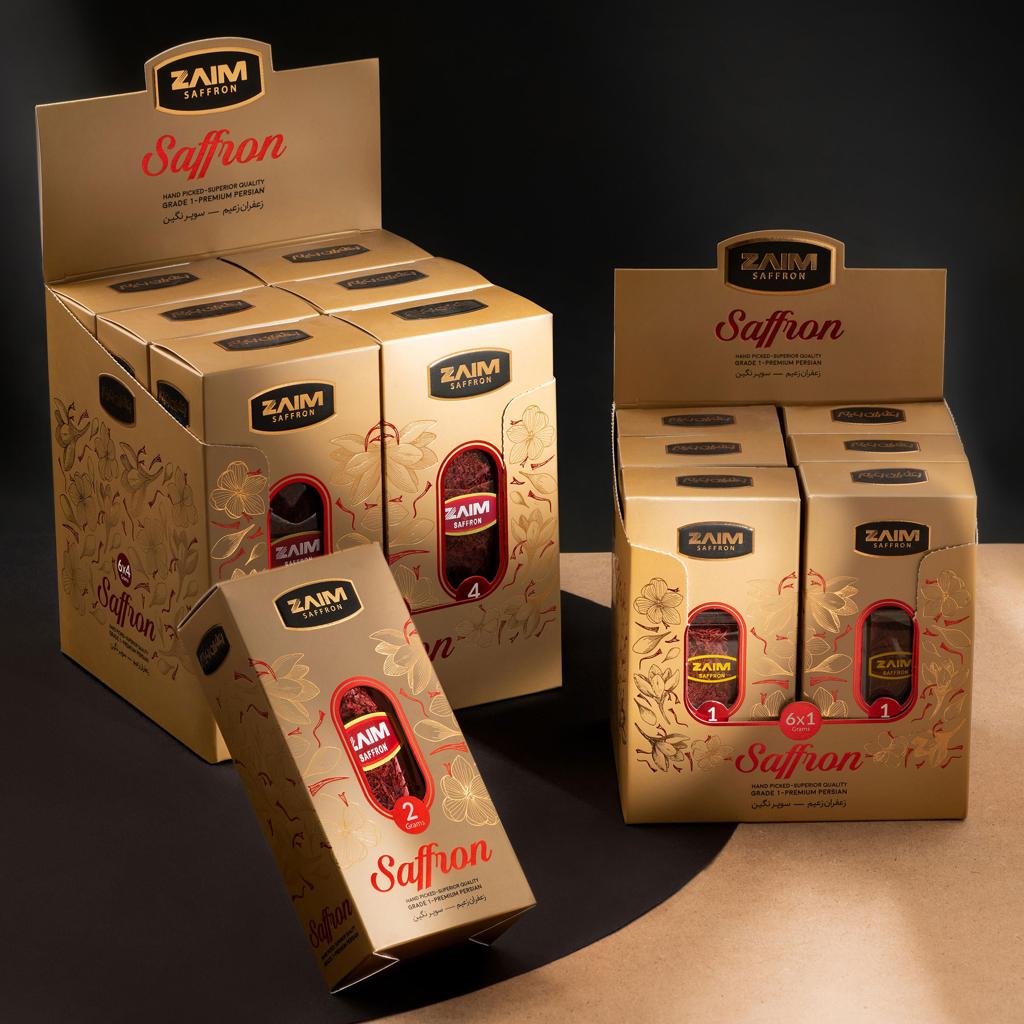
Bulk Saffron Packaging
Bulk saffron can be supplied in different packaging formats depending on the buyer’s needs.
Potential formats include:
- Small retail containers
- Glass jars
- Metal containers
- Food-grade pouches
- Vacuum or high-barrier packaging
- Bulk export packaging
The packaging should protect saffron from:
- Moisture
- Light
- Excessive oxygen exposure
- Physical damage
- Contamination
The appropriate packaging depends on the destination market and expected storage period.
Private Label Iranian Saffron
Private-label saffron can be an attractive opportunity for international brands.
Instead of selling saffron under the producer’s brand, the product can be prepared and packaged according to the buyer’s branding requirements, subject to applicable regulations and supplier capabilities.
Private-label projects may involve:
- Custom packaging
- Custom labels
- Retail sizes
- Brand design
- Product specifications
- Batch information
- Export documentation
For premium markets, the packaging can be an important part of the product’s perceived value.
Saffron for Food Manufacturers
Food manufacturers often require a different approach from retail buyers.
Their priorities may include:
- Consistent coloring strength
- Stable supply
- Batch consistency
- Competitive cost
- Laboratory documentation
- Suitable bulk packaging
For industrial applications, a less visually premium grade may sometimes be more commercially efficient if it meets the required technical specifications.
This is why buyers should define the product specification before selecting the grade.
Saffron for Restaurants
Restaurants typically value:
- Aroma
- Color
- Flavor
- Consistency
- Ease of use
- Price
Premium restaurants may prefer Negin or Super Negin because of their presentation and perceived quality.
High-volume restaurants, however, may focus more heavily on performance and cost.
Saffron for Retail Brands
Retail brands need to consider both product quality and presentation.
Consumers often judge saffron based on:
- Packaging
- Color
- Thread appearance
- Origin
- Brand reputation
- Price
- Product information
For this market, premium grades such as Negin and Super Negin can provide a strong visual presentation.
What Affects the Price of Iranian Saffron?
The price of saffron is influenced by many variables.
These may include:
- Grade
- Quality
- Coloring strength
- Origin
- Harvest conditions
- Supply and demand
- Packaging
- Order quantity
- Market destination
- Exchange rates
- Export costs
Therefore, comparing two saffron quotations solely by price per kilogram can be misleading.
The buyer should compare the complete product specification.
For a more detailed discussion, link this section internally to the Saffron Price article on Tida Saffron.
Why the Cheapest Saffron May Not Be the Best Deal
A lower price can sometimes reflect:
- Lower grade
- Lower coloring strength
- Higher moisture
- More broken material
- Different specifications
- Less expensive packaging
For industrial users, the most useful comparison may be the cost of achieving the required performance rather than the nominal price per kilogram.
This is particularly important for food manufacturers purchasing large quantities.
How to Compare Two Saffron Suppliers
A professional comparison should look like this:
| Factor | Supplier A | Supplier B |
|---|---|---|
| Origin | Verify | Verify |
| Grade | Compare | Compare |
| Crocin / Color Strength | Compare | Compare |
| Aroma | Compare | Compare |
| Moisture | Compare | Compare |
| Purity | Compare | Compare |
| Packaging | Compare | Compare |
| MOQ | Compare | Compare |
| Price | Compare | Compare |
| Documentation | Compare | Compare |
| Export Experience | Verify | Verify |
This approach provides a much more meaningful comparison than simply asking:
“Who sells saffron cheaper?”
Export Documentation
International saffron transactions may require various commercial and regulatory documents depending on the destination country.
Potential documentation can include:
- Commercial invoice
- Packing list
- Certificate of origin
- Product specifications
- Laboratory analysis
- Shipping documents
- Food-safety documentation
- Other documents required by the importing country
The exact requirements vary by destination and transaction structure.
Buyers should confirm applicable import requirements before placing an order.
For non-retail containers, international food standards can also require important information such as product name, lot identification, manufacturer/packer information, country of origin, and storage instructions.
Saffron Traceability
Traceability is increasingly important in international food supply chains.
A professional saffron supply chain should ideally allow a buyer to identify:
- Origin
- Harvest period
- Production batch
- Processing
- Packaging
- Shipment
Batch traceability can help both suppliers and buyers manage quality issues more effectively.
Storage and Transportation of Export Saffron
Even high-quality saffron can lose quality if transported or stored incorrectly.
Saffron should be protected from:
- Excessive heat
- Moisture
- Direct light
- Strong odors
- Unnecessary exposure to air
The packaging and transport conditions should therefore be considered part of the quality strategy rather than an afterthought.
The current ISO 3632-1:2025 standard also includes recommendations relating to storage and transport conditions.
How Long Can Export Saffron Be Stored?
Properly dried and packaged saffron can remain usable for a considerable period.
However, quality characteristics such as aroma and coloring performance can gradually change over time.
For this reason, professional buyers should pay attention to:
- Production date
- Harvest year
- Packaging date
- Storage conditions
- Stock rotation
A good inventory-management system can help maintain product quality.
How to Detect Potentially Adulterated Saffron
Saffron is a high-value spice, which makes authenticity important.
Potential problems can include:
- Foreign plant material
- Artificial coloring
- Excessive moisture
- Addition of lower-cost materials
- Incorrect labeling
Simple home tests may provide clues, but they cannot replace professional laboratory analysis.
ISO has noted that saffron quality standards help evaluate characteristics such as flavor, aroma, color, purity, and moisture, while laboratory methods can help identify foreign materials and artificial colorants.
Why Whole-Thread Saffron Can Be Easier to Evaluate
Whole saffron threads allow buyers to visually inspect the product more easily than powdered saffron.
Powdered saffron can be more difficult to evaluate visually because different plant materials can be mixed together and the original structure is no longer visible.
This does not mean powdered saffron is automatically inferior. Powder can be appropriate for certain food-production applications.
However, buyers should pay particular attention to laboratory analysis and supplier documentation when purchasing powdered saffron in bulk.
Iranian Saffron for International Markets
Different markets may have different preferences.
Some customers may prioritize:
- Premium appearance
- Long red threads
- Luxury packaging
Others may prioritize:
- Coloring strength
- Aroma
- Price
- Bulk availability
Therefore, an exporter should understand the target market before deciding which saffron grade and packaging format to offer.
Building a Long-Term Saffron Supply Relationship
For importers, the best supplier is not necessarily the one offering the lowest initial price.
A long-term relationship should ideally be based on:
- Consistent quality
- Transparent communication
- Reliable supply
- Clear specifications
- Accurate documentation
- Stable packaging
- Professional logistics
- Responsive customer service
Consistency is especially important for brands that sell saffron under their own name.
A customer who receives excellent saffron in one shipment and significantly different quality in the next may lose confidence in the brand.
A Practical Checklist for Iranian Saffron Importers
Before confirming an order, review the following:
Product
-
Country of origin confirmed
-
Grade confirmed
-
Product form confirmed
-
Sample approved
-
Quality specification agreed
Laboratory
-
Laboratory report reviewed
-
Coloring strength checked
-
Aroma-related characteristics checked
-
Taste-related characteristics checked
-
Moisture checked
-
Purity checked
Commercial
-
Price confirmed
-
MOQ confirmed
-
Packaging confirmed
-
Payment terms confirmed
-
Delivery terms confirmed
Logistics
-
Export documents confirmed
-
Shipping method confirmed
-
Destination requirements checked
-
Storage conditions agreed
Frequently Asked Questions
Is Iranian saffron good for export?
Yes. Iranian saffron is available in a wide range of grades and qualities and is used in international food, retail, restaurant, and wholesale markets. However, each batch should be evaluated according to its actual specifications.
Which Iranian saffron grade is best?
There is no single best grade for every application. Super Negin and Negin are commonly positioned in premium segments, while Sargol can offer an attractive balance of quality and cost.
How can I buy Iranian saffron in bulk?
Start by identifying a reliable supplier, requesting samples and specifications, reviewing laboratory information, confirming packaging and documentation, and then agreeing on commercial terms.
What is the best Iranian saffron for restaurants?
It depends on the restaurant’s requirements. Premium restaurants may prefer Negin or Super Negin, while high-volume kitchens may prioritize consistent performance and cost.
What is ISO 3632 in saffron?
ISO 3632 is an international standard framework for saffron specifications and testing. The current Part 1 specification is ISO 3632-1:2025, while ISO 3632-2:2010 covers test methods.
Should I ask for a saffron laboratory report?
For significant commercial purchases, requesting appropriate laboratory documentation is strongly advisable. It provides objective information that visual inspection cannot provide.
Is Super Negin always better than Sargol?
Not necessarily. Super Negin generally has a premium physical presentation, but actual chemical quality depends on the individual batch and its production and storage conditions.
What documents may an international saffron buyer need?
Requirements depend on the destination country and transaction. Commercial invoices, packing lists, origin documentation, product specifications, laboratory reports, and other regulatory documents may be required.
How should export saffron be stored?
Saffron should be protected from excessive heat, moisture, direct light, and strong odors. Suitable packaging and controlled storage help preserve quality.
Conclusion
Iranian saffron offers international buyers a wide range of opportunities, from premium retail and luxury gift products to restaurants, food manufacturing, wholesale distribution, and private-label brands.
However, successful saffron sourcing requires more than finding a low price.
International buyers should evaluate the complete product specification, including origin, grade, physical characteristics, laboratory quality, packaging, documentation, storage, and supplier reliability.
Super Negin and Negin can be attractive choices for premium markets, while Sargol and other grades can provide excellent solutions for food service and industrial applications.
For professional buyers, laboratory testing is particularly important. The current ISO 3632-1:2025 specification provides an international reference for dried saffron, while ISO 3632-2:2010 provides the associated test methods.
Ultimately, the best Iranian saffron for export is not simply the product with the highest price or the most attractive appearance. It is the product that consistently meets the buyer’s technical requirements, target-market expectations, packaging needs, and commercial objectives.
For importers looking for a long-term supplier, consistency, transparency, traceability, quality documentation, and reliable communication should be considered just as important as the saffron itself.