Saffron Usage in the Food Industry: How to Calculate the Right Amount
Saffron is a valuable spice used in the food industry to enhance the color, aroma, and flavor of products such as confectionery, chocolate, desserts, ice cream, beverages, dairy products, sauces, and ready meals. However, saffron usage in the food industry varies from one product to another, and there is no single dosage suitable for every formulation or production line.
The amount of saffron required depends on several factors, including the type of product, saffron quality and coloring strength, the form of saffron used, preparation methods, processing conditions, and the desired color and aroma. Food manufacturers must therefore consider both the characteristics of the raw material and the actual conditions of their production process when determining the appropriate amount.
This article explores the main factors affecting saffron consumption, how to calculate the required amount for a production batch, quality control considerations, and how to choose a reliable saffron supplier for industrial applications.
How Much Saffron Is Used in the Food Industry?
The amount of saffron used in food manufacturing depends on the formulation of each product. For example, the quantity needed to achieve the desired color and aroma in a beverage may differ considerably from the amount required for a dairy dessert, bakery product, or ready meal.
Even two similar products may require different amounts of saffron because the coloring strength of the raw material, the other ingredients in the formulation, and the processing conditions may vary.
Rather than relying on a universal dosage, manufacturers should first identify the purpose of adding saffron. Is the primary goal to achieve a golden color? Is aroma more important? Or should both characteristics be clearly noticeable in the finished product?
Answering these questions helps manufacturers establish an initial test quantity and optimize the formulation through controlled trials.
What Factors Affect Saffron Usage in Food Manufacturing?
1. Saffron Quality and Coloring Strength
Saffron quality is one of the most important factors influencing the amount required. Saffron contains compounds such as crocin, safranal, and picrocrocin, which contribute primarily to its color, aroma, and characteristic taste, respectively.
Saffron’s coloring strength depends on the characteristics of the raw material and how it is harvested, dried, and stored. Using saffron with consistent quality and measurable specifications can help manufacturers achieve more consistent color and aroma in their finished products.
When purchasing saffron for industrial production, appearance alone is not enough. Purity, moisture content, sensory characteristics, and relevant quality test results should also be considered.
For businesses seeking pure, high-quality saffron for food production or commercial use, technical specifications and consistent product quality are essential. Tida Trading Company conducts quality control testing and supplies saffron to domestic and international markets, helping buyers assess products that suit their requirements. To learn more about available products and supply options, visit [Buy Saffron from Tida].
2. Product Type and Formulation Ingredients
The ingredients in a food product influence how saffron’s color, aroma, and flavor are released and distributed. Products containing fat, protein, water, or acidic ingredients may behave differently when saffron is added.
In products such as ice cream and dairy desserts, manufacturers need to evaluate how evenly saffron disperses throughout the mixture. In beverages, the solubility and stability of saffron compounds within the final formulation are also important.
In bakery and confectionery products, processing temperatures may affect the intensity of the color and aroma that remain after cooking or baking. The amount of saffron should therefore be determined according to the formulation and the desired final result, rather than simply copying the quantity used in another product.
3. Saffron Forms: Threads, Powder, and Extract
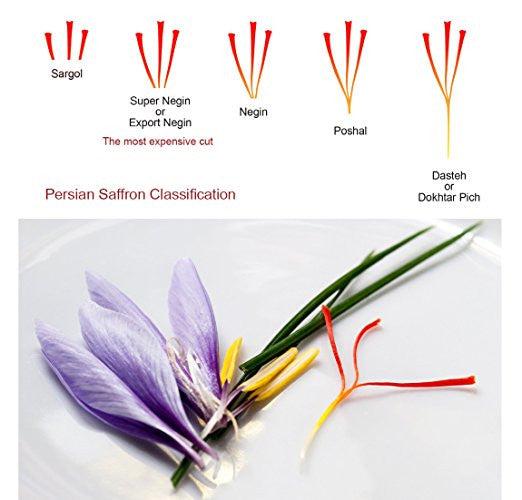
Saffron is available for food applications in several forms, including whole threads, cut threads, powder, and extract. Each form has specific characteristics related to preparation, distribution throughout the product, and storage.
- Saffron threads: Their physical appearance can be inspected, making them suitable for applications where the visible presence of saffron is desirable.
- Cut saffron threads: These may simplify preparation and distribution in certain production processes.
- Saffron powder: Its particle size may make it easier to disperse in some formulations. However, purity and storage conditions require particular attention.
- Saffron extract: This may be useful in formulations where controlled addition of coloring or aromatic compounds is important. The extract’s concentration and technical specifications must be established before calculating the required amount.
These forms should not be treated as equivalent without considering their concentration and coloring strength. For example, one gram of an extract with a specified concentration will not necessarily produce the same effect as one gram of dried saffron.
4. Temperature and Processing Conditions
Processing temperature, heating time, exposure to light and oxygen, and storage conditions can affect the stability of saffron compounds. Research into saffron drying methods also indicates that processing conditions can influence the stability of some of its valuable constituents.
Increasing the amount of saffron is not always the best way to compensate for a loss of color or aroma. Adjusting the time of addition, preparation method, or thermal processing conditions may produce better results.
Manufacturers should test their products under actual production conditions and evaluate color, aroma, and flavor after processing and throughout the intended storage period.
How to Calculate the Amount of Saffron per Kilogram of Product
To calculate the required amount of saffron, manufacturers must first establish a trial usage rate per kilogram of product. This rate should be determined through formulation testing, taking into account saffron characteristics and the desired outcome.
Once the trial usage rate has been established, the required amount for a production batch can be calculated using a simple formula:
Required saffron = Saffron usage per kilogram of product × Total batch weight
If the usage rate is expressed in grams per kilogram, the batch weight should be expressed in kilograms to obtain the result in grams.
Example: Calculating Saffron for a Production Batch
Suppose preliminary testing establishes a hypothetical saffron usage rate of 0.05 grams per kilogram of product. This figure is for illustrative calculation purposes only and is not an industrial recommendation or a standard dosage for any specific product.
For a production batch weighing 100 kilograms:
0.05 × 100 = 5 grams of saffron
If the batch size increases to 1,000 kilograms:
0.05 × 1,000 = 50 grams of saffron
Once a suitable usage rate has been validated for a specific formulation, manufacturers can calculate the amount required for different production volumes. This approach supports raw material purchasing, inventory management, and production cost estimation.
How to Estimate the Cost of Saffron Used in Production
To estimate saffron costs, multiply the required quantity by the price per gram.
For example, if a batch requires 5 grams of saffron and the hypothetical price is 100,000 Iranian tomans per gram, the saffron cost would be:
5 × 100,000 = 500,000 Iranian tomans
This figure is provided solely to illustrate the calculation method. It does not represent the current market price or Tida’s selling price. Industrial cost estimates should account for current prices, saffron type and quality, preparation costs, and purchasing terms.
Saffron Usage Across Different Food Categories
The appropriate amount of saffron depends on the formulation and production objectives. Rather than presenting fixed dosages that cannot be applied universally, the following table highlights key considerations for different food categories.
| Product Category | Key Factors Affecting Usage |
|---|---|
| Confectionery and bakery products | Desired color and aroma intensity, baking time, and temperature |
| Ice cream and dairy desserts | Even distribution, fat and protein content, and aroma intensity |
| Beverages | Saffron form, color and aroma stability, and formulation characteristics |
| Ready meals | Product type, heating time, moisture content, and final flavor |
| Sauces and condiments | Formulation ingredients, acidity, and desired color intensity |
| Products containing saffron extract | Extract concentration, technical specifications, and active compound content per serving |
The best way to determine the appropriate usage rate is to conduct small-scale trials at several dosage levels, compare the samples, and select a formulation that achieves the desired quality at a reasonable cost. These trials should record the quantity of saffron used, processing conditions, and final results to improve production consistency.
For more information about available products, visit [Tida Saffron Products].
Important Considerations When Buying Bulk Saffron for Food Manufacturing
Sourcing saffron for industrial production differs from purchasing it for household use. In commercial orders, factors such as batch-to-batch consistency, reliable supply, packaging, transportation, and suitability for the production process are particularly important.
When choosing a saffron supplier, consider the following factors:
- Purity and authenticity: Review product specifications and relevant test results to help verify the authenticity of the raw material.
- Consistent quality: Variations between batches can affect the color, aroma, and flavor of finished products.
- Technical specifications: Consider the product form, moisture content, sensory characteristics, and other parameters relevant to the intended application.
- Packaging and storage: Packaging should protect saffron quality during storage and transportation.
- Order volume and supply continuity: The supplier’s ability to meet production schedules is especially important for factories and export-oriented businesses.
- Quality documentation: Before confirming a commercial order, ask about relevant test results and the quality documentation available for the specific batch.
For food production, packaging, or commercial trading, choosing a supplier that matches your order volume, destination market, and quality requirements is essential. Tida Trading Company specializes in saffron supply and export. To explore available options and discuss commercial orders, visit [Bulk Saffron Supply and Purchasing].
How to Optimize Saffron Usage in Food Production
Optimizing saffron usage does not simply mean reducing the quantity at any cost. The goal is to achieve the desired, repeatable product quality while managing raw material consumption effectively.
The following steps can help manufacturers optimize saffron usage during product development:
- Define the desired outcome: Establish the expected color, aroma, and flavor intensity.
- Select saffron with clear specifications: Use raw material whose quality and characteristics can be evaluated.
- Conduct small-scale trials: Compare different usage rates under consistent conditions.
- Evaluate the preparation method: Where appropriate, adjust the extraction or addition method.
- Assess the product after processing: Do not rely solely on the appearance of the sample before production; evaluate the finished product as well.
- Record the formulation and results: Document the usage rate, batch number, and processing conditions so that subsequent production batches can be compared.
- Monitor stability during storage: For products with longer shelf lives, assess color and aroma stability under the intended storage conditions.
This approach can help reduce quality variations, control costs, and improve saffron supply planning.
Buying Saffron for Domestic Markets and Export
Choosing the right saffron for food manufacturing or international trade requires careful consideration of quality, product specifications, and supply arrangements. For export orders, buyers should also consider destination-market requirements, packaging, necessary documentation, and transportation conditions.
Through quality control testing and the supply of pure, high-quality saffron, Tida Trading Company serves buyers looking for saffron for domestic and international markets. To select a suitable product, buyers should define their intended application, order volume, and required specifications before placing an order.
At Tida Trading Company, we draw on our experience, commitment to quality, and extensive international network. We are proud to serve hundreds of loyal customers worldwide, working to provide reliable sourcing, appropriate packaging, and timely delivery.
Looking for a reliable partner for trading premium Iranian products? Tida is your trusted partner in saffron export.
Frequently Asked Questions About Saffron Usage in the Food Industry
Is There a Standard Amount of Saffron per Kilogram of Food?
No. The appropriate amount depends on the product type, formulation, saffron quality, form, and desired outcome. The usage rate should be established through formulation trials and evaluation of the finished product.
How Can a Factory Calculate Its Saffron Requirements?
First, establish the trial usage rate per kilogram of product. Then multiply it by the total batch weight. For example, if a validated formulation requires 0.05 grams per kilogram and the batch weighs 100 kilograms, the calculated requirement is 5 grams. This is a mathematical example, not a general dosage recommendation.
Does Saffron with Higher Coloring Strength Always Require a Smaller Amount?
Higher coloring strength may reduce the quantity needed to achieve a specific color intensity. However, the final amount is not determined by color alone. Aroma, flavor, product type, and processing conditions also matter.
Is Saffron Powder Better Than Saffron Threads for Industrial Production?
Neither form is universally better for every application. The choice depends on the production method, distribution requirements, quality control, ease of preparation, and final product specifications. Purity and technical characteristics should be evaluated for both forms.
Does the ISO Standard Specify Saffron Dosage for Food Manufacturing?
No. The relevant saffron standards address quality characteristics and testing methods. The amount required in a particular food product must be determined through formulation development and testing of that product.
What Should Manufacturers Consider When Buying Bulk Saffron?
Purity, consistent quality, technical specifications, test results, packaging, storage conditions, and supply continuity are among the most important considerations. Before placing a bulk order, manufacturers should discuss their production requirements and the necessary quality documentation with the supplier.